University of Peradeniya University of Illinois at Chicago (UIC) Sivananthan Laboratories Inc., USA

Developing Human Resources in Health Professions Education (HPE)

A partnership between the University of Illinois College of Medicine, the Faculty of Medicine, University of Peradeniya and Sivananthan Laboratories Inc., USA, supporting educational scholarship in Sri Lanka.

Background

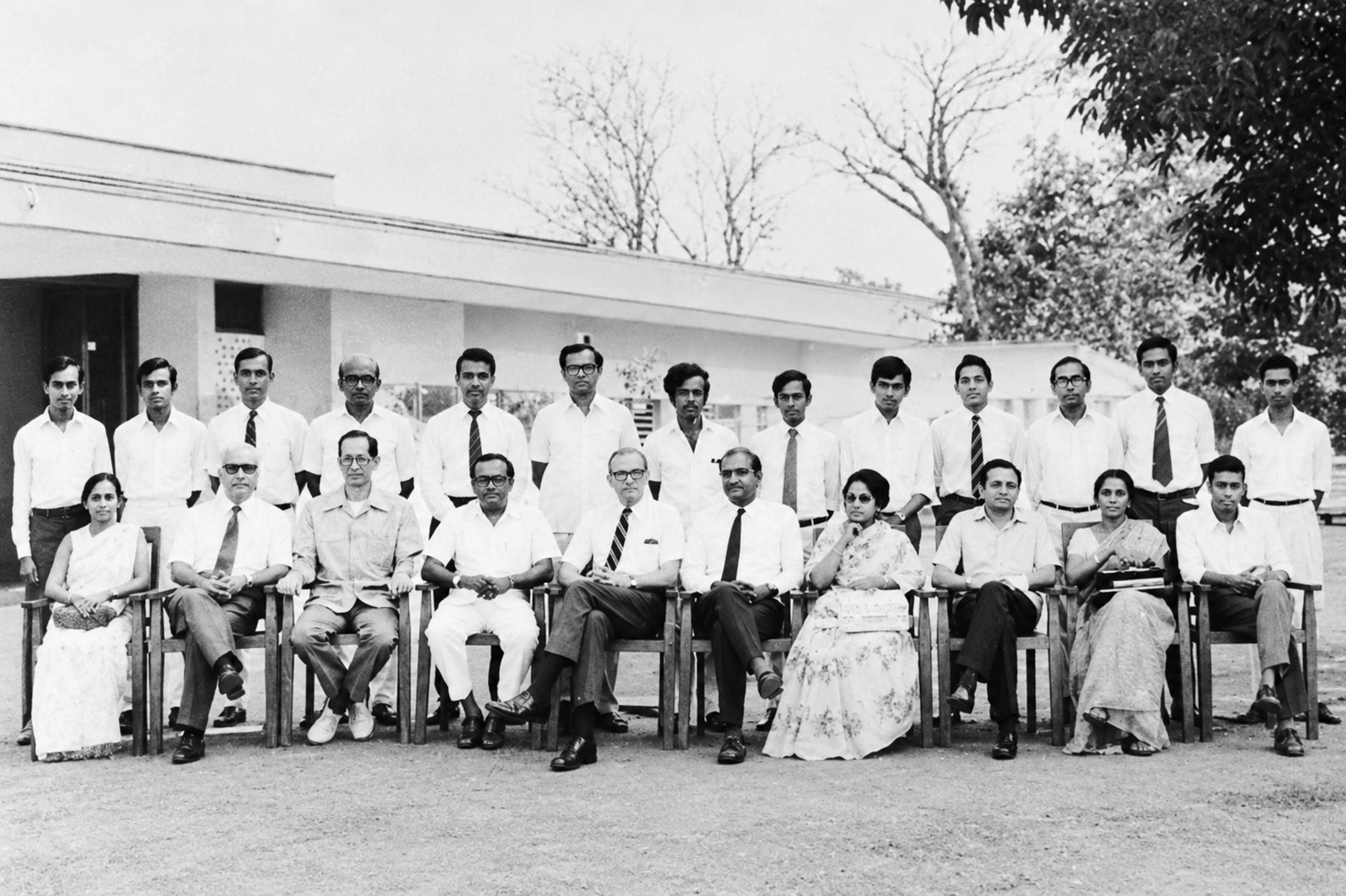
The partnership between the University of Illinois at Chicago (UIC) and the University of Peradeniya began in 1974. George Miller, MD, then Head of Medical Education at UIC, visited Sri Lanka to run workshops and train staff to establish the discipline of Medical Education in the country.

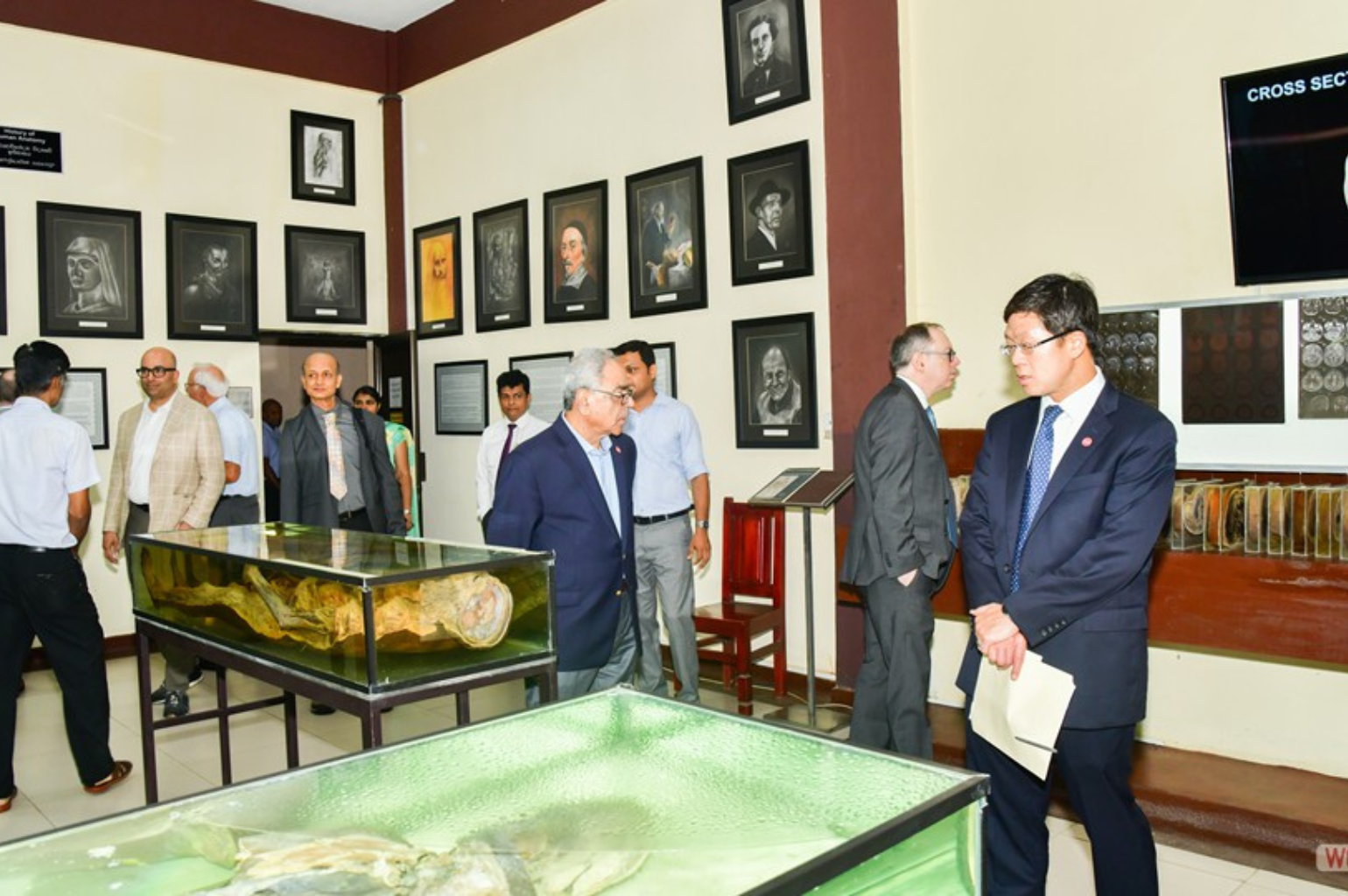
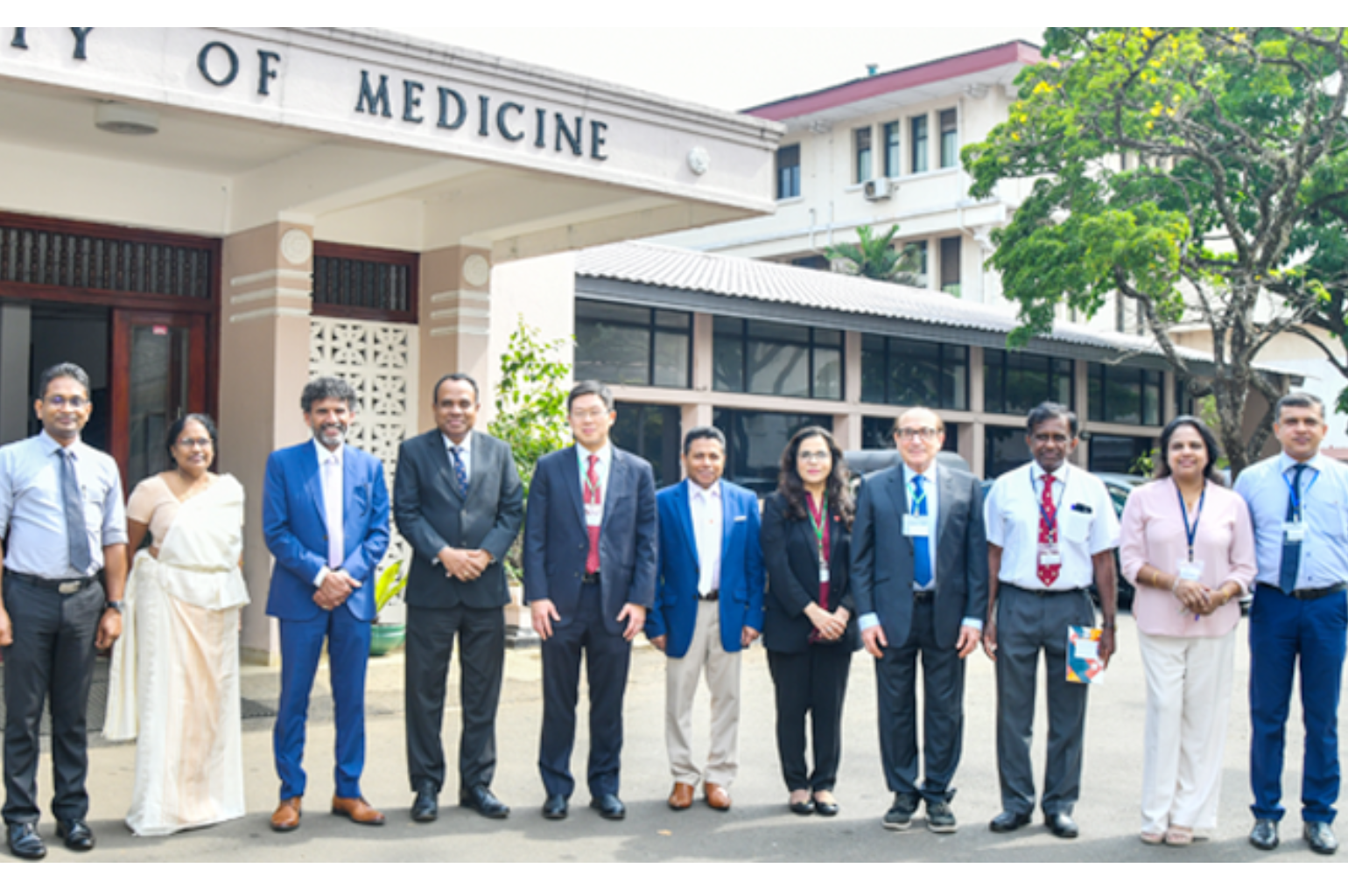
Nearly five decades later, with the generous support of Sivananthan Laboratories, Ilinois, Chicago, UIC leaders visited Sri Lanka on 13–16 October 2024 to re-engage in the collaboration.

  1. George Miller, MD, visits Peradeniya and helps establish Medical Education as a discipline in Sri Lanka.

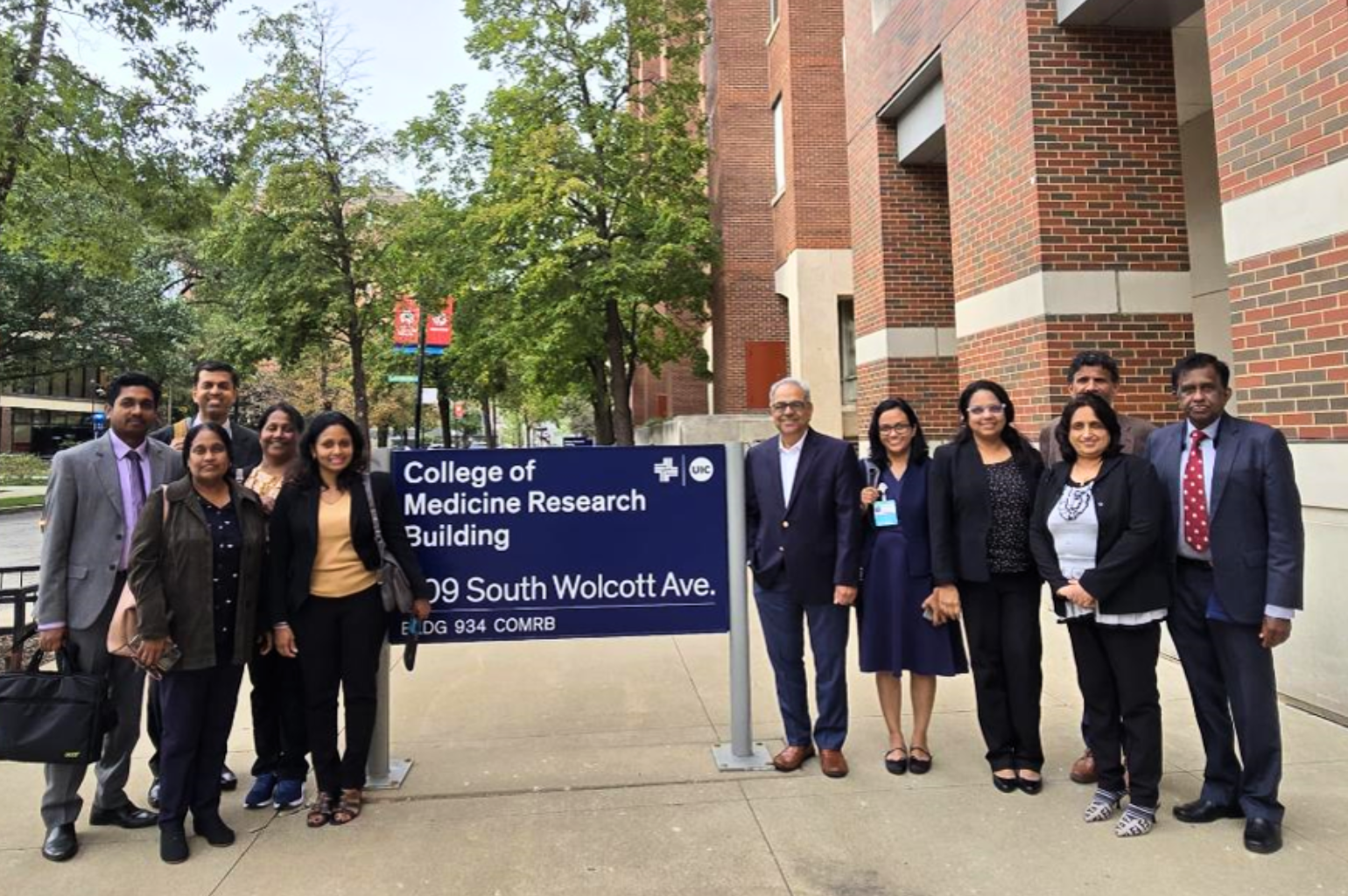
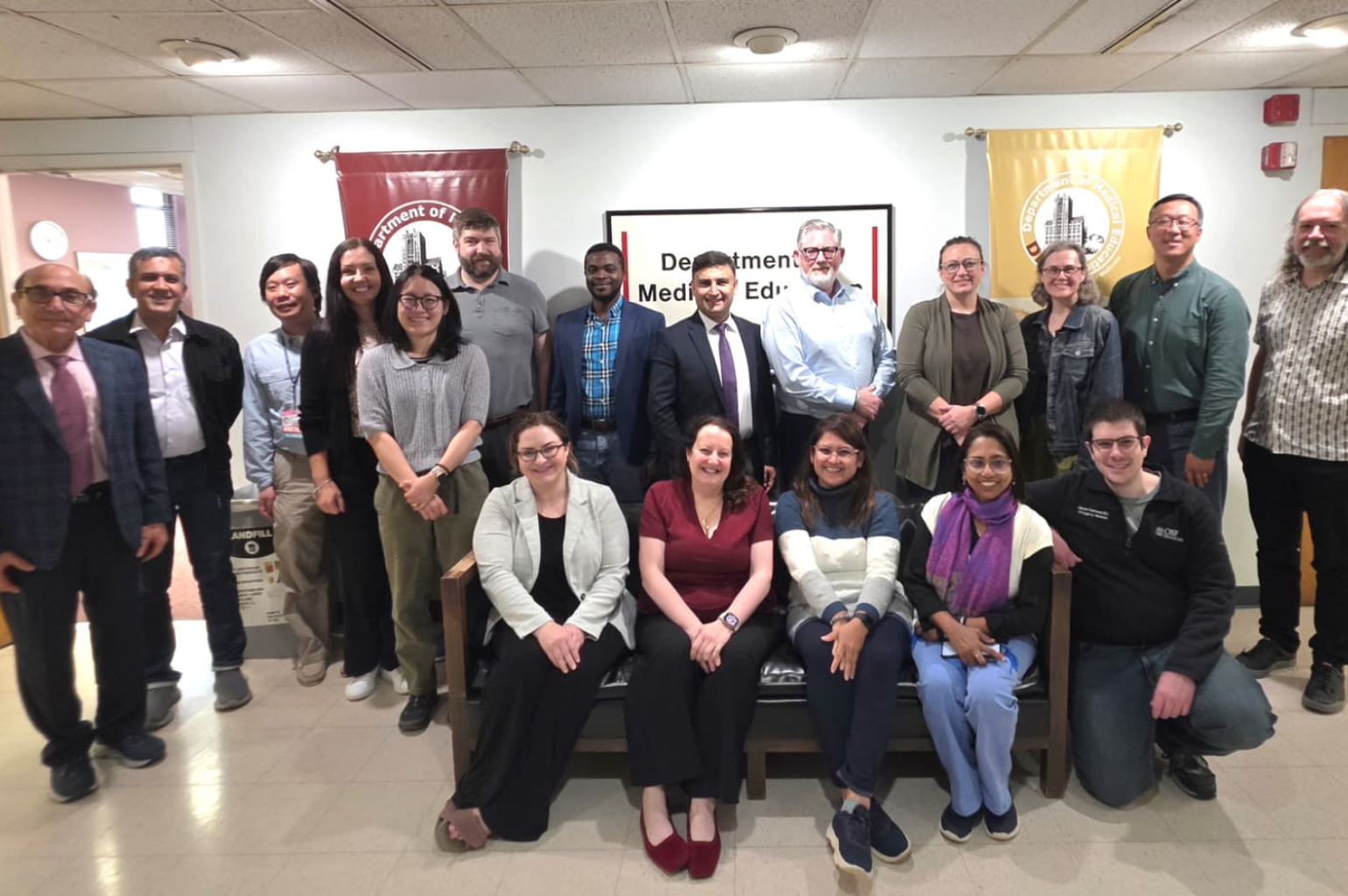
  2. A Peradeniya delegation visits UIC in September 2024: Prof. M.D. Lamawansa (former Vice-Chancellor), Prof. Vasanthi Pinto (former Dean), Prof. Kosala Marambe, Prof. Rajitha Abeyesekera, Prof. Manoji Pathirage, Dr. Sayuri Perera, Dr. Chathurika Dandeniya, from Faculty of Allied Health Sciences Prof. Lalani Yatawara and Dr. Mayooran

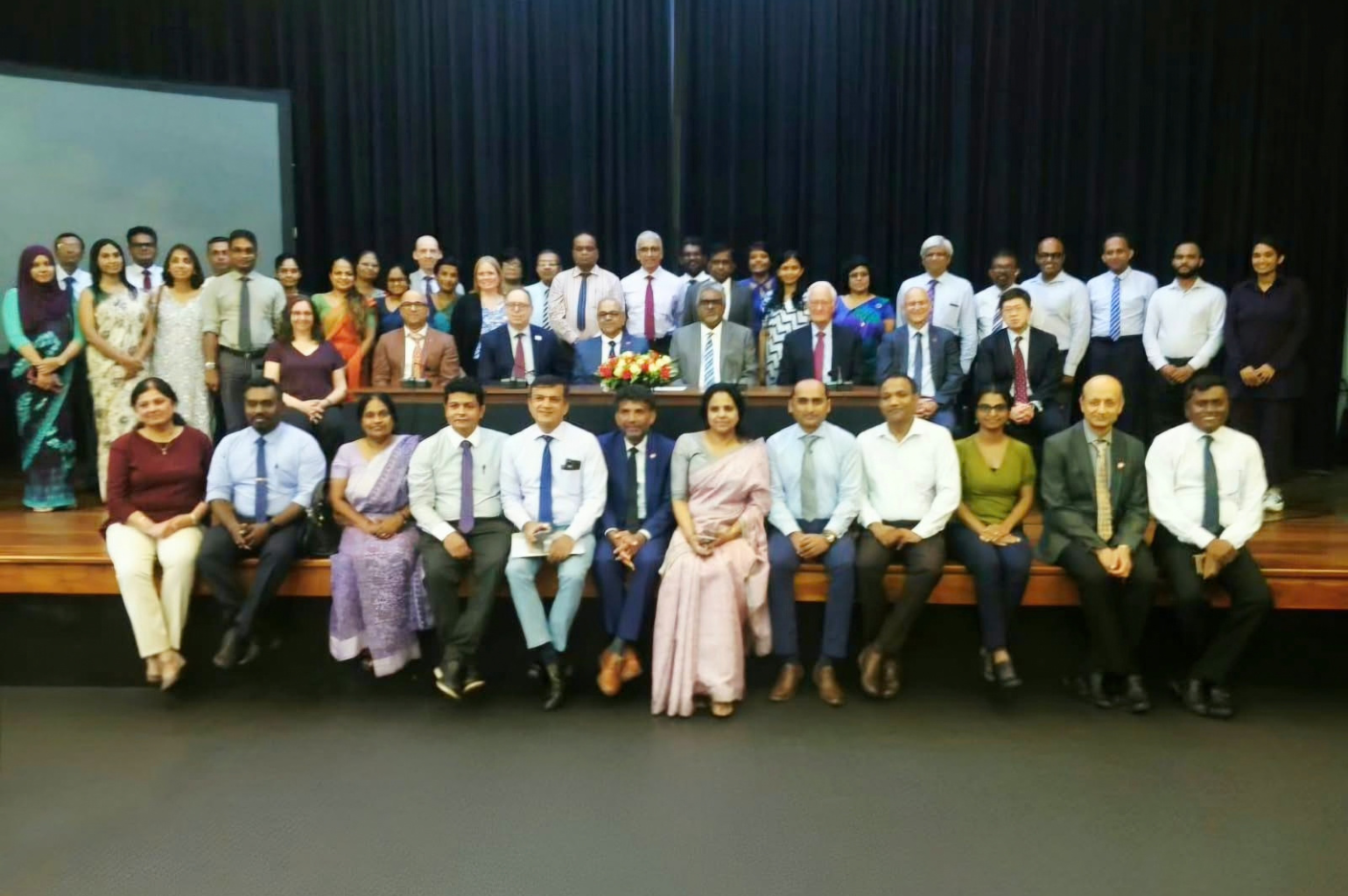
  3. UIC leaders visit Sri Lanka. A seminar at the University Grants Commission, Colombo, on 14 October is attended by Deans and representatives of the medical faculties, who ask for staff development workshops open to all medical faculties.

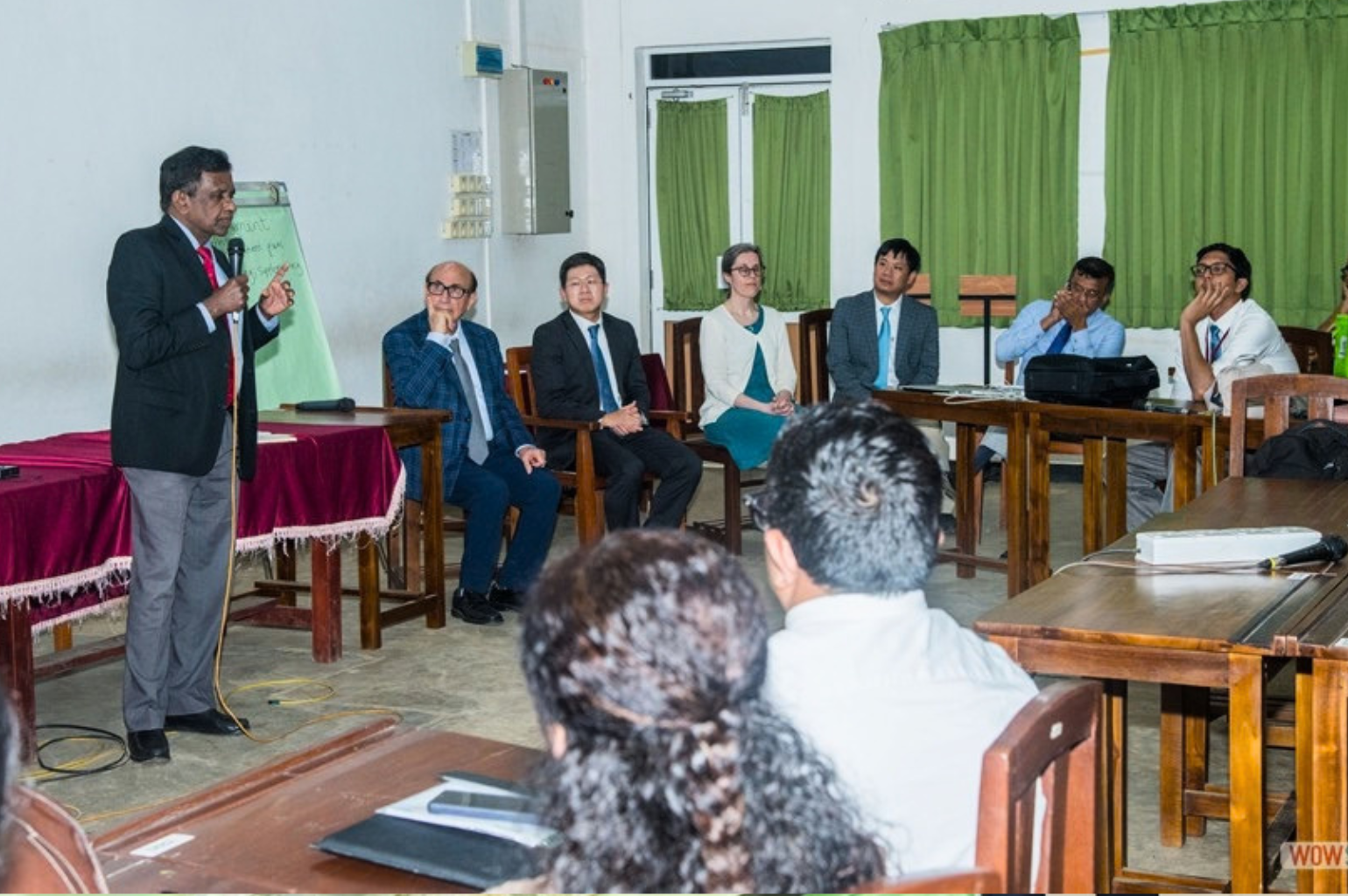
  4. First workshop, Peradeniya.

  5. Second workshop, Peradeniya.

  6. Three online Zoom meetings and webinars discuss ongoing work and possible collaborations.

  7. FoM peradeniya team visiting the UIC for medical education workshop

  8. Prof. Ara Tekian and Prof. Yoon Soo Park are appointed Honorary Visiting Professors by the University Senate.

  9. ⁠FoM team visiting UIC for the AI for medical education and research workshop

Staff development workshops

Participant feedback showed a high degree of satisfaction and motivation to adopt good practices in routine work.

Clinical teaching: instruction and assessment

31 March – 2 April 2025

About 60 participants, mainly clinical staff from the Faculties of Medicine and Dental Science in Sri Lanka.

  • Yoon Soo Park, PhD, Ilene Harris Professor and Department Head of Medical Education
  • Ara Tekian, PhD, MHPE, Professor and Associate Dean for International Affairs
  • Memoona Hasnain, PhD, Professor of Family and Community Medicine and Associate Dean, Faculty Development

Scholarship, innovation and integration of AI for educational research

6–8 October 2025

About 70 staff from health sciences, engineering and medical faculties in Sri Lanka.

  • Yoon Soo Park, PhD
  • Ara Tekian, PhD, MHPE
  • Lauren Maggio, PhD, Professor and Director of Research
  • Brian Gin, MD, PhD, Associate Professor of Medical Education and Pediatrics

Outcomes so far

The collaboration is strengthening human resource development for health professions education and, ultimately, the quality of health care in the country.

What we plan to achieve

Short term

  • Give motivated staff the opportunity to attend the conferences in Chicago on 30–31 July 2026.
  • Share their experiences with the faculty through seminars.
  • Start collaborative projects.

Mid term

  • Strengthen capacity building at faculty level to form a critical mass of experts, especially among mid-career staff.
  • Support about 4–5 staff members to obtain Master's qualifications.
  • Appoint a group of staff associates (health professions educators) to the Department of Medical Education.

Long term

  • Promote research in health professions education, leading to joint publications.
  • Offer split postgraduate training through the faculty or PGIMS.

Programme Overview

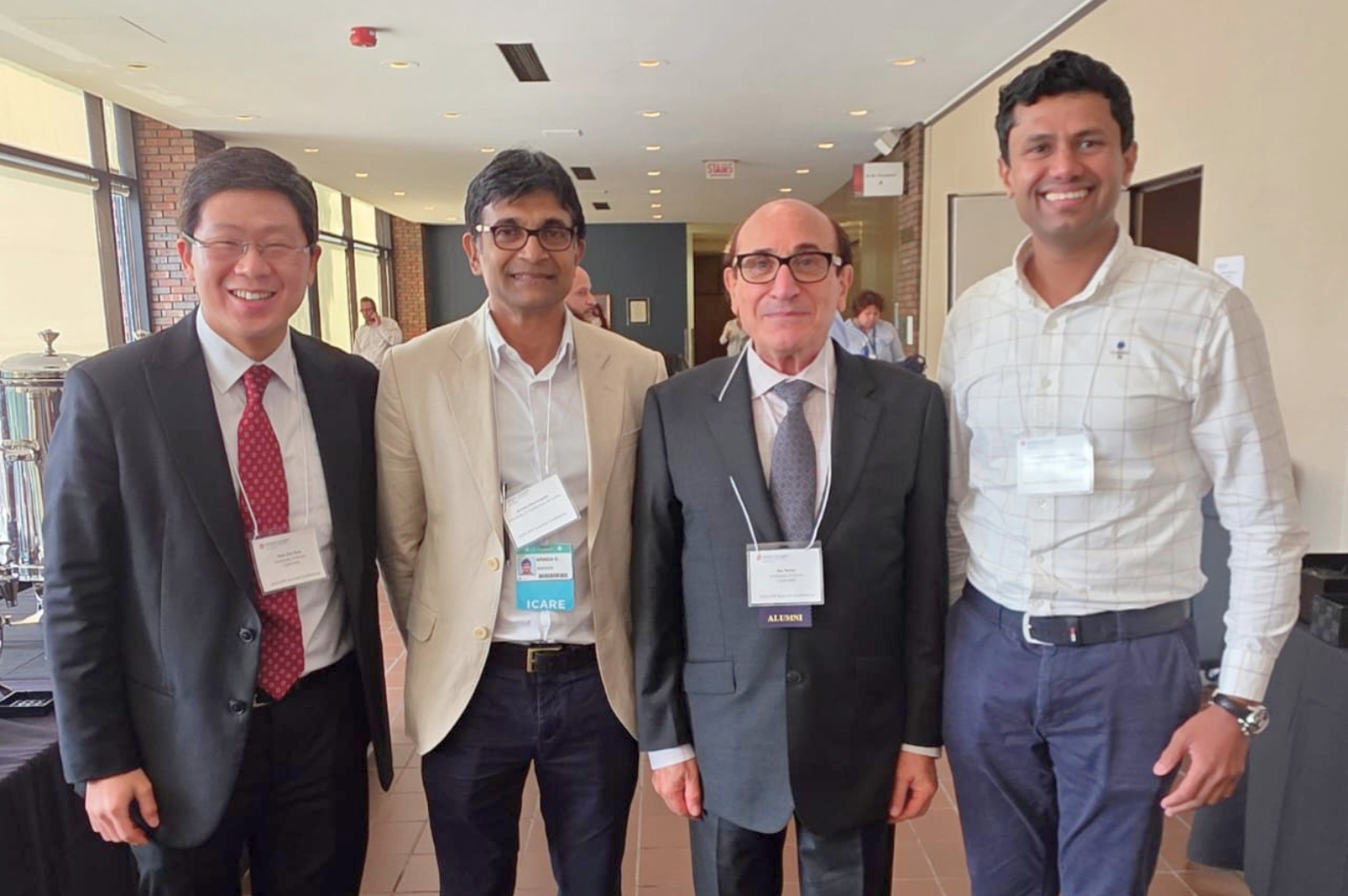
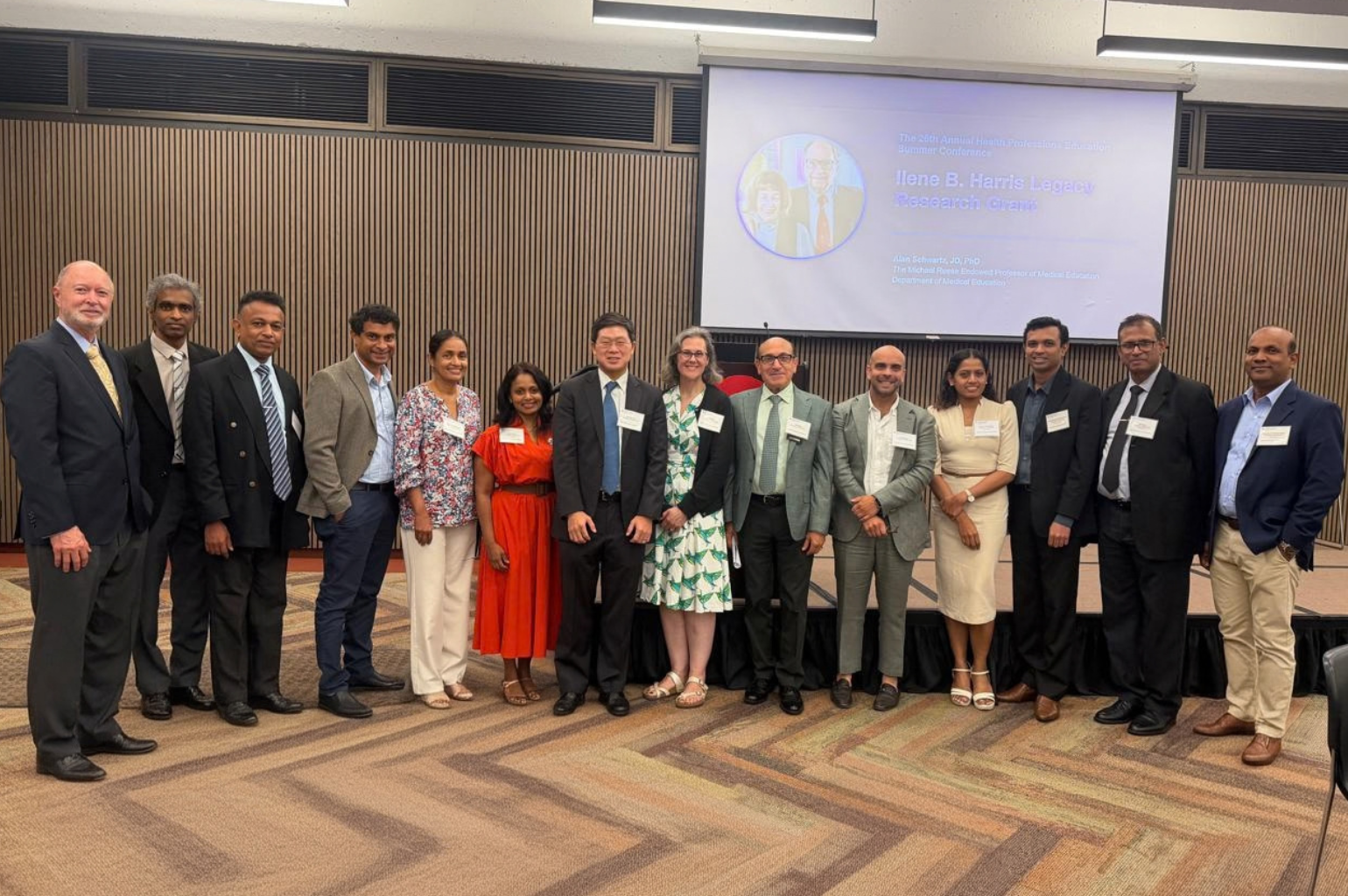
The Faculty of Medicine, University of Peradeniya delegation visited the University of Illinois Chicago (UIC) from 25 July to 2 August 2026 to strengthen collaboration in medical education, clinical training, research and faculty development.

The programme combined participation in the 26th Annual Health Professions Education Summer Conference with departmental meetings, institutional visits and interactive workshops. Key themes included competency-based education, assessment, simulation, student wellbeing and responsible artificial intelligence use. Prof. Radhika Sreedhar facilitated a practical AI workshop, while Prof. Yoon Soo Park coordinated the delegation’s academic engagement.

The reported follow-up agenda includes collaborative research, publications, postgraduate training proposals, educational interventions and online teaching across multiple disciplines.

Future priorities are to translate these opportunities into achievable projects with designated leads, agreed timelines and measurable outcomes. The programme was generously sponsored by Prof. Sivalingam Sivananthan of Sivananthan Laboratories, whose continuing support has provided a foundation for sustained collaboration between the two institutions.

Delegation members and their collaborations

Select a name to read about that member's engagements during the visit to UIC.

Medical Education Team

Prof. M. D. Lamawansa

Prof. M. D. Lamawansa, former Vice-Chancellor of the University of Peradeniya and former Dean of the Faculty of Medicine, participated in the UIC visit as part of the initiative to strengthen institutional collaboration. His participation brought a university leadership perspective to discussions linking medical education, research, clinical training and international engagement.

The programme identified opportunities for collaborative publications, faculty development, postgraduate exchanges and educational innovation. Although the report does not document separate individual activities or subsequent milestones for Prof. Lamawansa, his involvement forms part of the broader development of the partnership.

A potential future contribution would be to provide strategic guidance, facilitate engagement between institutional leaders and help align collaborative projects with Faculty priorities.

The future direction is to support a sustainable partnership with clear responsibilities, realistic timelines and regular progress review. His leadership experience could help guide this process, subject to an agreed role within the continuing collaboration.

Dr. Sayuri Ruwanmali Perera

Dr. Sayuri Ruwanmali Perera’s collaboration focuses on student mental health, suicide prevention and university support services. The visit strengthened links with Prof. Niranjan Karnik and opened further opportunities with Prof. Steve Weine and the UIC Global Health team.

Ethical approval has been obtained for a psychological autopsy study of student suicides and an evaluation of Peradeniya’s Intermediate Care Centre. Other reported activities include planned research on ragging and bullying, and an MPhil study examining self-harm, recovery experiences and unmet support needs.

Discussions also addressed community psychosocial support, disaster response and stronger referral pathways involving university and community stakeholders.

Future priorities are to advance approved studies, develop manuscripts and refine remaining research protocols. Longer-term work will explore practical suicide-prevention approaches, community training and multidisciplinary support networks. The overall direction is to translate collaborative research into accessible, culturally relevant mental-health services that support student wellbeing, recovery and continued participation in university education.

Prof. Damitha Asanga Gunawardena

Prof. Damitha Asanga Gunawardena’s UIC engagements focused on public health, occupational health, disaster preparedness, epidemiological research and medical education. Discussions with Prof. Babatunde Olowokure and Prof. Samuel Dorevitch identified opportunities for collaborative research and professional training.

Proposed activities include certificate courses in Occupational Health and Safety and Disaster Management and Preparedness. A secondary-data collaboration on dengue and another jointly selected disease area aims to generate two manuscripts. An online safety survey was also discussed.

Educational opportunities include evaluating teaching methods and structured essay-question assessment with Dr. Radhika Sreedhar. Interdisciplinary work includes a proposed childhood anaemia study with Dr. Sinnarajah Krishnapradeep and continued collaboration with Dr. Sayuri Perera.

Future priorities are to confirm feasible projects, identify available datasets and prepare research and course proposals. The longer-term direction is a sustained public health partnership producing relevant publications, strengthening workforce capacity and supporting educational improvement in response to Sri Lankan institutional and community needs.

Dr. Sinnarajah Krishnapradeep

Dr. Sinnarajah Krishnapradeep’s UIC engagements covered paediatric research, child public health, simulation and AI-supported medical education. Discussions with paediatric haematology specialists explored feasible research involving local patient populations and online contributions to postgraduate teaching.

A childhood anaemia proposal is planned with Prof. Damitha Gunawardena and Prof. Samuel Dorevitch. The report also records the design of an AI-supported learning module, with anticipated input from Dr. Radhika Sreedhar. Collaboration with Dr. Wasana Kudagammana will address antibiotic stewardship and antimicrobial resistance.

Simulation discussions focused on developing and validating an undergraduate curriculum. Prof. Bob Kaiser expressed willingness to support online teaching and faculty development, while possible assistance with simulation equipment remains subject to approval.

Future priorities are to refine the anaemia proposal, develop the simulation curriculum and evaluate AI-supported case discussions. The broader direction is to strengthen clinical reasoning, practical competence and postgraduate learning through sustained collaboration between paediatric, public health and medical education teams.

Dr. Buddhika Kamaneeya Dassanayake

Dr. Buddhika Kamaneeya Dassanayake’s UIC engagements focused on surgical training, gastroenterology, tele-mentoring, hepatology, transplantation and medical education. Discussions with Prof. Roy Phitayakorn and the Gastroenterology team explored postgraduate training opportunities and possible UIC Global Health support.

A formal proposal is planned to define the training model and institutional arrangements. Tele-mentoring was discussed as a potential platform for remote observation, teaching and research, alongside robotic-surgery knowledge exchange.

Discussions with Dr. Roth addressed equity and accessibility in hepatology and transplantation, with opportunities for collaboration and publication. Prof. Georges Bordage shared clinical reasoning and assessment resources. Dr. Dassanayake also contributed to discussions on a structured student database.

Future priorities are to develop a feasible training pathway, identify suitable tele-mentoring activities and define a focused publication. The longer-term direction is a sustained surgical partnership that strengthens postgraduate training, supports formative assessment and creates practical opportunities for shared clinical expertise and educational research between both institutions.

Prof. Chrisman Neil Roshan Alexander Alles

Prof. Neil Alles’s discussions at UIC focused on biochemistry teaching, nutrition, interdisciplinary integration and student research. A central theme was helping students connect fundamental biochemical concepts with clinical applications, supporting more integrated learning across the medical curriculum.

A systematic review and meta-analysis of teaching and learning approaches in biochemistry was identified as a potential collaborative publication. This offers an opportunity to examine educational evidence and inform curriculum development, although the report does not specify whether the review has commenced.

Discussions with Dr. Radhika Sreedhar also explored an optional nutrition course incorporating AI-supported learning, student research and educational evaluation.

Future priorities are to define the review question, establish the collaborative team and develop the nutrition course’s learning objectives and assessment approach. The longer-term direction is to strengthen clinically integrated biochemistry education through evidence-informed teaching, evaluated AI applications and increased student involvement in research, supported by continuing academic exchange between Peradeniya and UIC.

Dr. Chathurangani Gayana Kumari Amiyangoda

Dr. Gayana Amiyangoda’s UIC engagements linked pharmacology education with research on non-communicable diseases and lipid disorders. Discussions explored extending ongoing screening among university students, including a possible MPhil research component.

The reported agenda includes a prospective familial hypercholesterolaemia database, a related scoping review and potential future genetic research. Engagement with Prof. Brian Layden also considered strengthening an ongoing scoping review on diabetic dyslipidaemia.

Discussions with Prof. Linda Chang addressed pharmacology curriculum reform, assessment of student research projects and evaluation of teaching approaches using pre- and post-intervention measures. Dr. Amiyangoda also contributed to discussions on a structured student database with colleagues from both institutions.

Future priorities are to refine the reviews, establish feasible database requirements and select an educational intervention for evaluation. The longer-term direction combines stronger clinical research capacity with evidence-informed pharmacology teaching, supported by agreed protocols, appropriate approvals and clearly assigned responsibilities that enable achievable publications and further collaborative research.

Dr. Senaratne Pathiranage Ruwan Pramod Prematilake

Dr. Ruwan Prematilake’s UIC discussions focused on educational data, innovative teaching and responsible AI integration. A key opportunity was developing a structured student database with Prof. Nicole Perez, Dr. Gayana Amiyangoda and Dr. Buddhika Dassanayake.

The proposed approach begins with a simple dataset and one clearly defined outcome before expansion. Later additions could include student motivation, geographical background, educational measures and longitudinal training outcomes.

Teaching discussions explored interactive AI-supported questions and activities, with impact evaluated through pre- and post-intervention measures. Another proposed activity involves students producing AI-supported health-promotion videos to develop communication, creativity, digital literacy and responsible technology use.

Future priorities are to define the database’s purpose, agree on essential variables and establish appropriate data-management arrangements. A small educational pilot could provide an early evaluative opportunity. The longer-term direction is to connect student information with meaningful learning outcomes and generate evidence to guide effective, responsible AI use within undergraduate medical education.

Dr. Haputhanthirige Donna Wasana Samankumari Kudagammana

Dr. Wasana Kudagammana’s UIC engagements focused on infectious diseases, dengue, antimicrobial resistance and medical education. Discussions identified opportunities to connect microbiology research with clinical collaboration and students’ critical appraisal skills.

Molecular dengue research was explored with Dr. Ross, with the next step being refinement into feasible research questions. The report does not confirm a finalised protocol or commencement of data collection.

Antibiotic stewardship and antimicrobial resistance were identified as priorities requiring stronger links between microbiology and clinical departments. Proposed collaboration with Dr. Sinnarajah Krishnapradeep provides an opportunity to address these issues within paediatric practice.

Discussions with Dr. Radhika Sreedhar explored teaching students to recognise inaccurate or fabricated AI-generated information.

Future priorities are to define a manageable dengue project, establish a focused stewardship collaboration and develop an educational intervention addressing AI misinformation. The longer-term direction connects infectious-disease research, antimicrobial stewardship and educational evaluation through interdisciplinary collaboration and sustained academic exchange with UIC.

Prof. Kodikara Arachchige Sarathchandra Kodikara

Prof. Sarathchandra Kodikara’s UIC engagements focused on postgraduate forensic training, research, digital educational resources and AI-supported assessment. Discussions at the Office of the Chief Medical Examiner, Cook County, explored extended placements for Sri Lankan postgraduate trainees and shorter reciprocal rotations in Sri Lanka.

Research opportunities include establishing a focal contact and exploring collaborative use of post-mortem data, subject to ethical, legal and data-governance requirements. Peradeniya’s digital forensic museum was proposed as a shared educational resource.

An educational study was suggested to compare existing multiple-choice questions with AI-assisted, expert-reviewed refinements using assessment measures. Discussions also considered an AI learning module, with Dr. Radhika Sreedhar facilitating academic links.

Future priorities are to prepare a trainee-placement proposal, establish research contacts and define a feasible assessment study. The longer-term direction combines international training, shared resources and evaluated AI applications.



AI Workshop Team

Prof. Saman Nanayakkara

Ongoing collaborative work focuses on developing concept papers with multidisciplinary teams to explore AI-integrated teaching and learning strategies. These initiatives aim to enhance student engagement by addressing identified barriers and introducing innovative, learner-centred educational approaches.

Prof. Indu Nanayakkara

Ongoing collaborative work focuses on developing concept papers with multidisciplinary teams to explore AI-integrated teaching and learning strategies. These initiatives aim to enhance student engagement by addressing identified barriers and introducing innovative, learner-centred educational approaches.

Dr. Senani Samarasinghe

Ongoing collaborative work focuses on developing concept papers with multidisciplinary teams to explore AI-integrated teaching and learning strategies. These initiatives aim to enhance student engagement by addressing identified barriers and introducing innovative, learner-centred educational approaches.